How to Layer Candle Scents: Best Candle Scent Combinations
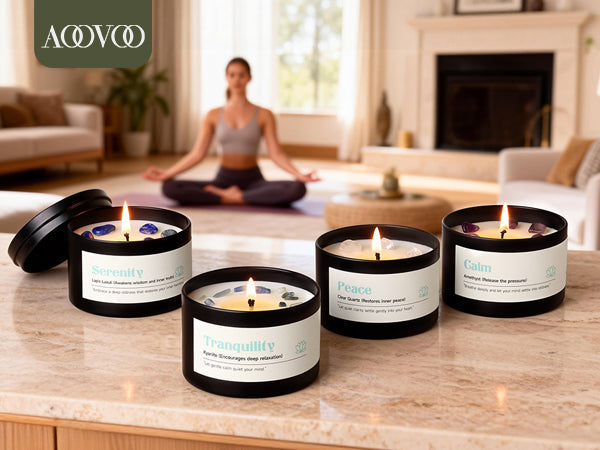
Sometimes one candle creates exactly the atmosphere you want. On other days, a single fragrance may feel like it is missing something.
You may love the warmth of vanilla but want it to feel a little more sophisticated. You may enjoy lavender but prefer to soften its herbal character with something creamier. Or perhaps you want your living room to smell layered and personal instead of like one recognizable fragrance note.
That is where candle scent layering comes in.Layering scented candles allows you to combine two complementary fragrances and create a home scent that feels more complex, balanced, and personal. The process does not require professional fragrance knowledge or a large candle collection. You simply need to understand a few basic pairing principles and begin with two scents that work well together.
In this guide, you will learn how to layer candle scents, which candle scents go together, how to avoid overwhelming a room, and which AOOVOO candle combinations work best for cozy evenings, quiet bedrooms, fresh bathrooms, and elevated living spaces.
What Is Candle Scent Layering?
Candle scent layering is the practice of using two complementary candle fragrances to create one combined home fragrance experience.
You can layer candles in several ways:
- Burn two candles in the same room
- Use complementary fragrances in adjoining rooms
- Burn one scent first and introduce another later
- Use one candle as the main fragrance and another as a softer background note
The goal is not simply to make the room smell stronger. Good fragrance layering creates balance.One scent may provide warmth while another adds freshness. A floral candle may become more grounded when paired with wood. A sweet fragrance may feel more mature when combined with sandalwood or patchouli.
When the pairing works, you should still be able to notice the character of each candle, but the room develops a new fragrance identity that neither candle creates alone.
Why Layer Scented Candles?
Fragrance layering gives you more flexibility than using one candle at a time.
* It Makes Home Fragrance Feel More PersonalMany people enjoy vanilla, lavender, rose, or eucalyptus. Layering allows you to take a familiar fragrance and make it feel more specific to your home.Vanilla can feel cozy on its own. Add sandalwood, and it becomes warmer and more polished.Lavender can feel herbal on its own. Add vanilla, and it becomes softer and creamier.Eucalyptus can feel crisp on its own. Add clove or patchouli, and it gains warmth and depth.
* It Helps You Adjust a Fragrance to the SeasonYou can use layering to make a candle feel lighter or richer depending on the time of year.In warmer months, pair a warm fragrance with a fresh botanical note.In cooler months, combine vanilla, tonka bean, sandalwood, patchouli, or gentle spice for a deeper atmosphere.
* It Creates Different Moods with the Same Candles.The same candle can feel completely different depending on what you pair with it.Rose and sandalwood may feel elegant in the living room. When paired with lavender and patchouli, the combination can become quieter and more reflective.Vanilla and tonka bean can feel cozy on their own. Pair them with rose and sandalwood, and the result may feel more like a warm boutique hotel or an intimate dinner at home.
Understanding Basic Fragrance Families
You do not need to become a perfumer to layer candle scents, but understanding a few fragrance families makes pairing easier.
* Floral Scents.Examples include rose, lavender, jasmine, and peony.Floral fragrances can feel soft, romantic, fresh, powdery, or herbal. They often pair well with woods, vanilla, musk-inspired notes, and gentle spice.
* Woody Scents.Examples include sandalwood, cedarwood, patchouli, and oud.Woody notes add structure, warmth, and depth. They are useful when you want to make a sweet or floral candle feel more mature.
* Gourmand Scents.Examples include vanilla, tonka bean, coconut, caramel, coffee, and almond.Gourmand fragrances are inspired by edible notes. They tend to feel warm and comforting, but they can become overly sweet when paired with another strong dessert-style scent.Combining gourmand notes with woods, herbs, or florals can create better balance.
* Fresh and Botanical Scents.Examples include eucalyptus, mint, citrus, greenery, and herbs.These fragrances can make a space feel brighter and more refreshed. They often pair well with lavender, woods, gentle spice, and light vanilla.
* Spicy Scents.Examples include clove, cinnamon, cardamom, and pepper.Spice adds warmth and energy. Because spicy notes can become dominant, they are often best used as a supporting layer rather than the strongest fragrance in the room.
Four Rules for Layering Candle Scents
Before experimenting with combinations, follow these four simple rules.
*Begin with Two Candles.When you are learning how to mix candle scents, start with two.Three or four fragrances can quickly become difficult to identify and may overwhelm the space. Two candles give you enough contrast to create something new while keeping the combination understandable.
*Choose a Main Scent and a Supporting Scent.The two candles do not need to contribute equally.Choose one fragrance to define the overall atmosphere. Use the second candle to add warmth, freshness, softness, or depth.For example, vanilla may be the main scent, while sandalwood provides the background. In another room, eucalyptus may lead while lavender softens the sharper botanical character.
*Consider the Size of the Room.A fragrance combination that works in a large open living room may feel too strong in a small bedroom or bathroom.In smaller spaces, you can:
- Burn the candles for less time
- Place one candle in an adjoining room
- Light the second candle later
- Use only one candle at full strength
- Avoid combining two highly intense fragrances
*Test the Combination Gradually.Before committing to a long burn, smell both unlit candles together.If the cold fragrances seem compatible, light the main candle first. After ten or fifteen minutes, light the supporting candle.Give the fragrances time to develop. You may find that the combination needs only twenty or thirty minutes to become noticeable.Always follow the burn-time and candle-care instructions provided with each product.
Best AOOVOO Candle Scent Combinations
The following candle pairings use AOOVOO fragrances to create four distinct home atmospheres.
*Vanilla & Tonka Bean with Coconut + Rose & Sandalwood.Best for: Warm, elegant, quietly luxurious rooms.Vanilla, tonka bean, and coconut create a smooth, comforting foundation. Rose adds floral softness, while sandalwood prevents the pairing from becoming too sweet.Together, these fragrances can create an atmosphere that feels warm, polished, and inviting.This is one of the best candle scent combinations for:Living rooms,At-home date nights,Dinner with friends,Coffee or dessert after a meal,Cozy evenings when you still want the space to feel elevated.Use Vanilla & Tonka Bean with Coconut as the main scent if you want a cozier result. Let Rose & Sandalwood lead if you want the combination to feel more floral and refined.
*Lavender & Patchouli + Vanilla & Tonka Bean with Coconut.Best for: Soft, cozy, screen-free evenings.Lavender and patchouli create an herbal, grounded atmosphere. Vanilla and tonka bean add warmth and soften the earthier notes.This pairing is especially suitable when you like lavender but do not want the room to smell entirely herbal.The combination works well during:Reading before bed,Evening skincare,Journaling,A quiet night without screens,Folding laundry,Slow weekend mornings,Relaxing on the couch.For a bedroom, begin with Lavender & Patchouli and introduce Vanilla & Tonka Bean later as a softer supporting fragrance.Always extinguish both candles before going to sleep.